


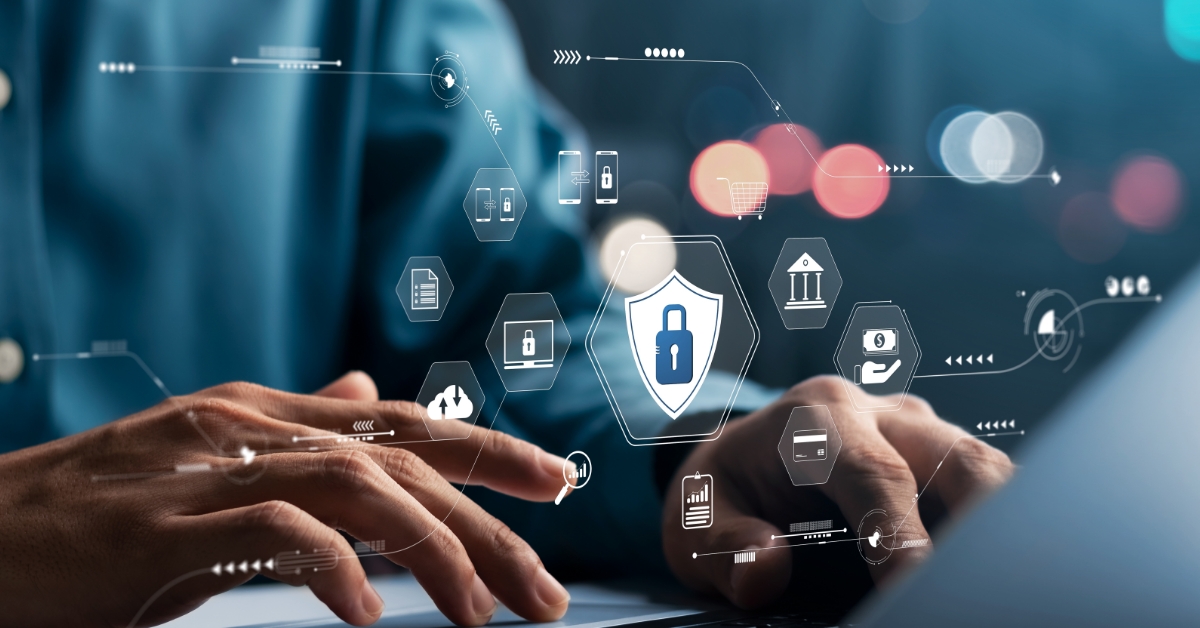
Online data protection also involves secure telecommunications. This is how FTTH fibre optics contributes to cybersecurity.
We all have a digital identity. Digital identities are made up of all of the information relating to a person on a computer system. Every time we log in online, for instance, we are sharing data about our digital identity.
The digital transformation of society has created lots of opportunities but also generated lots of risks, especially in the field of cybersecurity. Protecting our digital identity has become increasingly necessary, which is why implementing cybersecurity strategies is crucial for the smooth running of our professional and personal lives.
Cybersecurity: a requirement of the digital era
Cybersecurity is not only about protecting systems from cyber attacks but also implementing security policies on information management, consent release and GDPR.
Companies around the world are investing in Digital Safety & Security to protect their data and communication from increasingly elaborate hacking ploys. It is now such an integral part of the agenda that it has become one of the key measures identified by the International Telecommunication Union (ITU) Council within the area of the digital transition.
Fibre optics and cybersecurity
Open Fiber is very attentive to the problem of cybersecurity and has always placed great focus on implementing digital security practices within its business processes. This commitment to greater data security, and therefore personal security, is again linked to the corporate mission.
In fact, fibre optics is, by nature, capable of protecting users from virtual threats thanks to its specific characteristics. Let’s discover more.
Cybersecurity: 5 (+1) advantages of fibre optics
Unlike copper-based connections, fibre optic cables are hard to tamper with. In fact, it is much more difficult for cybercriminals to breach the infrastructure of fibre optics and access sensitive information. Here are 5 features, plus one, that make fibre optics an integral part of an effective IT security strategy.
1. Fibre optics is resistant to electromagnetic interference
Unlike DSL technologies, fibre optics is virtually immune to electromagnetic interference. With fibre optics, information is sent through cables in the form of light pulses, which makes communication more stable and minimises the risk of data loss or dispersion.
2. Fibre optic cables are more resilient
Thin, flexible and resistant: fibre optic cables are built in such a way as to make unauthorised physical access difficult. In addition, trying to damage the cables would cause such an obvious loss of connectivity that the attack would be immediately identified.
3. Fibre optics has strong encryption power
Fibre optics is extremely compatible with advanced encryption technologies. Encrypting data sent over FTTH networks enhance the security of sensitive information.
4. Very fast response times
One of the main characteristics of FTTH fibre optics is its low latency, i.e. its ability to transmit data instantaneously. In a field like cybersecurity, the ability to send information in real time is crucial, making it possible to react immediately when a threat is identified.
5. Fibre optics is immune to electronic risks
Fibre optics is based on light pulses and this makes it immune to interference or power issues. In the event of spikes in voltage, blackouts or power surges, the risk of data loss is negligible.
+ 1. Fibre optics is resistant to DDoS attacks
This is the plus point of fibre optics: its bandwidth capacity and robustness enable the handling of massive data flows without any significant interruptions. This being the case, fibre optics is easily able to foil DDOS (Distributed Denial of Service) attacks, which attempt to make a network resource or website unavailable.
In fact, fibre optics guarantees greater bandwidth and consequently this makes DDoS (Distributed Denial of Service) attacks, that attempt to make a network resource or website unavailable, more difficult. To carry out this type of attack on the FTTH network, more powerful devices are needed that act simultaneously to saturate the bandwidth.
Digital Safety & Security: free online course
For all of the reasons listed above, an ultra-broadband connection is a boon for online security. If the topic of cybersecurity interests you and you want to learn more, Open Fiber offers a free Digital Safety & Security course. Protecting yourself from virtual threats is all about having the right information!