


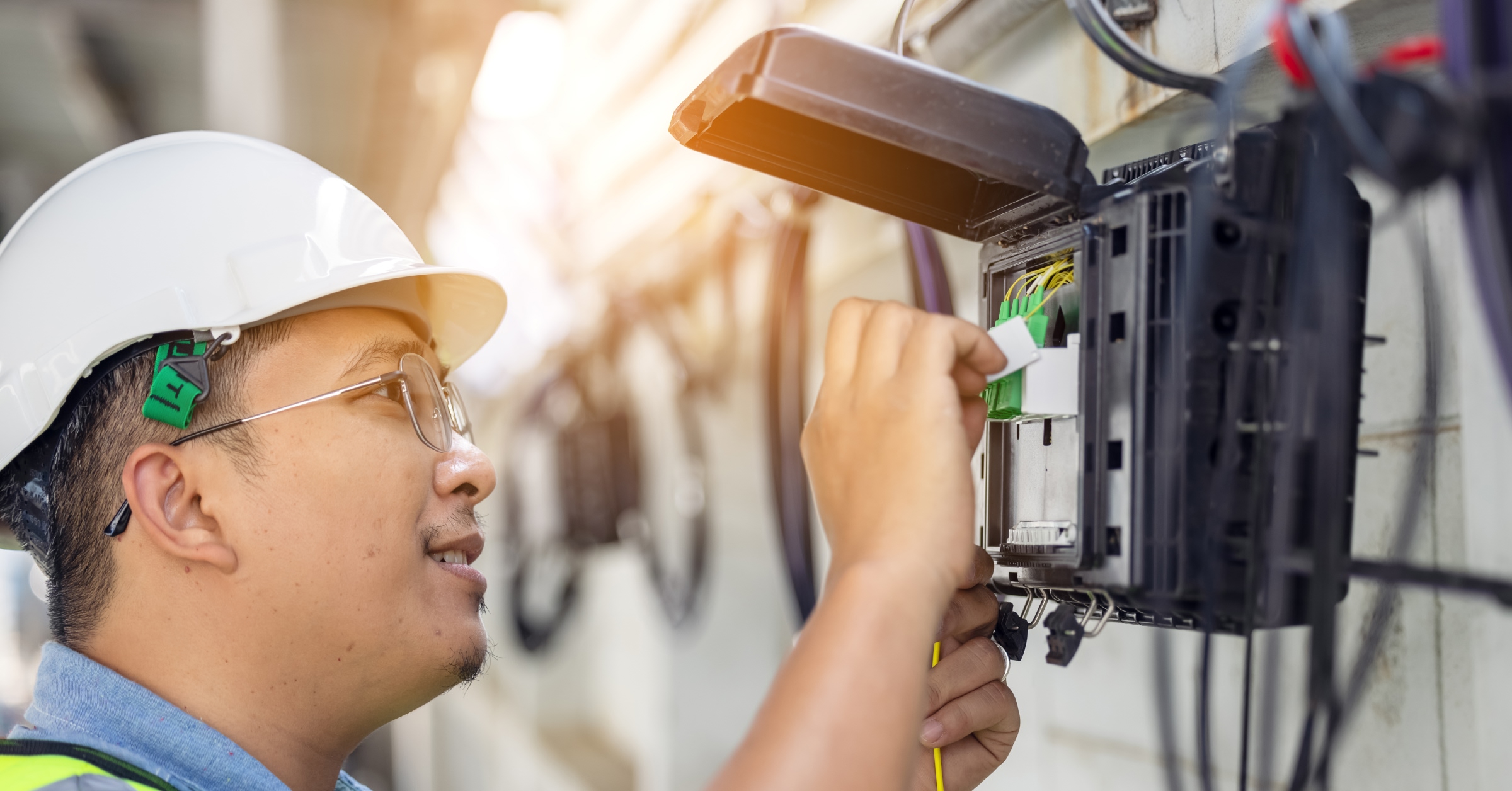
Not all internet connections are the same: xDSL, FWA, and fiber optics offer very different experiences. Let’s examine the main differences and understand which technology is truly ready to connect you to the future.
When it comes to internet connectivity, it’s important to understand that not all technologies provide the same performance. Copper networks, FWA (Fixed Wireless Access) solutions, and FTTH (Fiber To The Home) fiber optics are three very different approaches to bringing the internet into our homes and offices, each with its own characteristics in terms of speed, reliability, and future scalability.
The quality of the connection affects our daily digital activities, from remote work to pure entertainment, often relying on innovative technologies.
That’s why it’s crucial to clearly understand the differences between the available options, in order to choose a connection that truly meets every need.
Let’s take a closer look at these three technologies to understand which is the most high-performing and sustainable choice for the future.
xDSL: copper-based connection
xDSL technologies (Digital Subscriber Line) use copper wires for all or part of the network path and old telephone pairs to carry the signal. Specifically, they are divided into:
- VDSL (Very high bit rate DSL): it combines fiber up to the cabinet (FTTC) and copper to the home. Offers better performance than ADSL, but the speed (up to 100 Mbps) decreases with distance from the cabinet.
- EVDSL (or VDSL2+): an advanced version with vectoring techniques to reduce interference. Can reach 300 Mbps, but only within 300 meters from the cabinet.
- FTTC (Fiber To The Cabinet): a hybrid solution with fiber up to a roadside cabinet, and copper for the final stretch to the home. Better performance than ADSL, but speed drops significantly with distance. Under optimal conditions, it can reach up to 100 Mbps download.
- SHDSL (Symmetrical High-Speed Digital Subscriber Line): used in business environments, provides symmetrical speeds over copper but much lower (up to 5.69 Mbps) and very sensitive to distance. Multiple pairs increase distance but reduce speed.
- ADSL (Asymmetric Digital Subscriber Line): a fully copper-based network characterized by asymmetric speeds, with downloads up to 20 Mbps and significantly lower uploads. Now considered obsolete.
Why copper-based connections are a limitation
Copper-based technologies have clear structural limitations. For example, ADSL can reach up to 20 Mbps, and VDSL around 100 Mbps — but only over short distances and in ideal conditions.
Beyond the lower speed, these technologies suffer from instability between download and upload, resulting in inconsistent performance not suitable for modern needs like remote working or cloud services.
Furthermore, connection quality degrades significantly with increased distance from the exchange or cabinet, making them less capable of meeting today’s digital demands.
Copper is also vulnerable to weather conditions, cable aging, and electromagnetic interference. Unlike fiber optics, it is a costly and outdated technology for today’s standards.
FWA: A Complementary Solution to Fiber
FWA (Fixed Wireless Access) technology uses a mixed network: fiber optics reaches a radio antenna, and from there, the signal is transmitted wirelessly to the user’s home.
This is a useful solution in areas where laying fiber is difficult, such as rural or mountainous regions.
In this case, connection quality and speed depend on the radio signal, which may be affected by weather or congestion. For instance, speeds can reach up to 1 Gbps — but only under ideal conditions with the latest-generation equipment. Latency and stability are also lower compared to pure fiber optics.
FWA can be considered complementary to fiber, providing ultra-broadband in Italy’s White Areas and offering 1 Gbps download and 200 Mbps upload in the areas covered by the “Piano Italia a 1 Giga”.
The advantages of FTTH networks
Unlike xDSL and FWA technologies, FTTH brings a full-fiber connection directly from the central exchange to the home. This architecture represents the most advanced point in network infrastructure evolution, offering significant advantages in terms of performance, energy consumption, cost, and long-term maintenance.
A connection with superior performance
From a performance perspective, FTTH is a cutting-edge technology. Data is transmitted through light pulses within fiber optic cables, reaching speeds up to 10 Gbps for both upload and download. This makes the FTTH network ideal for all activities that require a fast, stable, and responsive connection, such as 4K/8K streaming, smart working, cloud computing, online gaming, and professional applications.
Thanks to latency below one millisecond, fiber optics is also the perfect foundation for emerging technologies like IoT (Internet of Things), telemedicine, augmented reality, home automation, and remote device control.
In addition, FTTH offers consistently stable signals: fiber optics do not degrade over distance, are not affected by weather, electromagnetic interference, or physical cable wear.
A sustainable Infrastructure
One of the most important benefits of fiber optics is sustainability. It’s a passive network that doesn’t require continuous power supply, unlike copper networks that are much more energy-intensive. This reduces energy consumption by over 60% and lowers environmental impact, including greenhouse gas emissions.
But the sustainability of fiber goes even further. The entire infrastructure is designed to be eco-friendly throughout its lifecycle:
- Fiber optic cables are small, lightweight, and flexible, requiring fewer materials to install and generating less waste than copper
- Installation times are shorter due to the compact and lightweight materials
- In the event of faults, the network allows the damaged point to be quickly identified, even remotely, thus allowing for lower costs in terms of intervention time and a saving in resources (human, means of work and natural resources)
- Maintenance is less frequent and more cost-effective compared to copper networks, thanks to fiber’s resistance to weather and temperature changes
Thanks to all these factors, FTTH is not only the best-performing choice for today’s and tomorrow’s connectivity, but also the smartest and most responsible one for the planet.
Open Fiber: fiber optics for everyone, everywhere
Open Fiber aims to reduce the digital divide year after year by building the largest FTTH network in Italy. By 2024, it had reached around 18.7 million property units, over 6,600 small municipalities, and more than 500 towns in industrial districts, enabling citizens and businesses to access ultra-broadband more equally.
At Open Fiber, we believe in full transparency of our goals and actions. That’s why you can always check the progress of our work on our official website. You can also learn more about our achievements in the 2024 Sustainability Report, a practical tool that highlights our commitment and strategic vision.
The future of connectivity is built on speed, stability, and sustainability — and it travels through fiber optics.
Have we reached your address yet? Check your coverage on our dedicated page.