


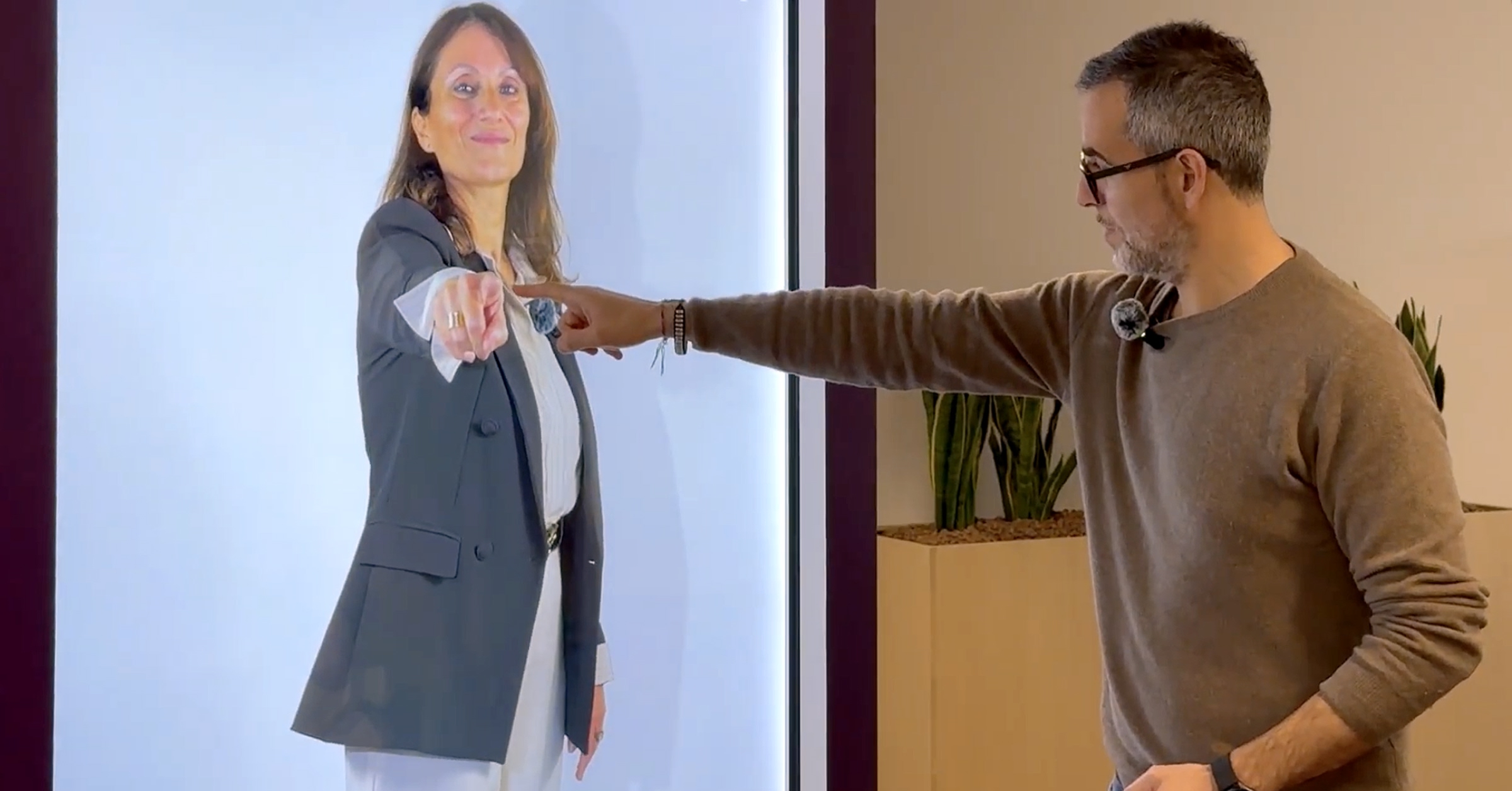
From science fiction to reality. Open Fiber sets a historic milestone for Italian innovation with the first long-distance data transmission: 64 Tbps over more than 600 km of fiber optics network.
Innovation is moving fast, turning the future into the present. With a record transmission of 64 Tbps (terabits per second) over more than 600 km of fiber optics network, Italy achieves a milestone that speaks to the world. It is concrete proof that technology, vision, and investment can overcome any distance. This achievement is not just about numbers, but about opportunities for businesses, territories, and citizens. Because when Italian excellence accelerates, progress becomes a shared reality.
From future to reality: Italy accelerates in the digital space
It is no longer just technology, but an immersive experience that makes possible what until yesterday seemed like science fiction, transforming the way we live, work, and communicate. Thanks to a cutting-edge fiber optics network, images and data move at the speed of the future, ensuring unprecedented quality, reliability, and continuity.
This milestone represents the symbol of an Italy that innovates, experiments, and dares to look beyond its borders, establishing itself as a key player on the international digital stage. From education to healthcare, from work to entertainment, every sector can benefit, developing new models of growth and collaboration.
A new era of smart connections and advanced services is now beginning, capable of simplifying everyday life and creating widespread value. A stronger, more inclusive, and competitive digital ecosystem is taking shape, laying the foundations for a sustainable, high-tech future.
Next-generation digital applications
The hologram, a concept introduced by Dennis Gabor in 1948, is a three-dimensional image obtained through the coherent interference of light waves. It is also well known in popular culture, for example in the famous Star Wars scene where Princess Leia sends a holographic message via the droid R2-D2.
In the technological field, holography has been applied to create a real-time transmission of a three-dimensional representation of a person between the cities of Rome and Milan. This result was made possible by the use of a network connection characterized by high stability, extremely low latency, and large bandwidth.
The test, carried out at the end of 2025, demonstrated that Open Fiber’s network infrastructure is capable of supporting next-generation digital applications. The combination of reliability, low latency, and high data transmission capacity enabled a hyper-realistic holographic experience and opens up innovative prospects in communication, work, and education.
Holographic transmission on an ultra-fast FTTH network
Holographic transmission goes beyond the delivery of a simple two-dimensional image: it is based on a complex three-dimensional data structure known as a Point Cloud, in which the object or person is digitally mapped in space through millions of points that reconstruct shape and depth in real time. To transmit a three-dimensional person or object clearly and continuously in real time, a network connection with high bandwidth capacity, low latency, and reliability is required.
Open Fiber’s FTTH (Fiber To The Home) fiber optics network, based on pure fiber optics all the way to the end user in both download and upload, offers symmetrical data transmission performance of up to 10 Gbps and a stable, sustainable connection quality, an essential requirement for supporting advanced applications such as real-time holographic transmission. This level of connectivity enables technological scenarios that until recently were considered unfeasible and paves the way for next-generation digital services.
The success of a holographic transmission on Open Fiber infrastructure confirms how the widespread adoption of fiber optics networks is a key element for the country’s digitalization, reducing environmental impact, shortening distances, and improving people’s lives not only in entertainment, but also in areas such as advanced telemedicine, immersive education, and more sustainable work models.
Check now whether your address is covered by Open Fiber’s fiber optics network.