


On the occasion of the International Day for Universal Access to Information, Open Fiber reaffirms its commitment to providing an ultra-fast, stable, and barrier-free internet connection. Fiber optics is the key driver in closing the digital divide and making the right to communicate and access information a concrete reality.
September 28 is the International Day for Universal Access to Information, established to reaffirm the value of information as a common good and a fundamental right. It offers an opportunity to reflect on how the ability to seek, receive, and share news, data, and knowledge is now essential for active participation in the social, economic, and democratic life of a country.
On this day, Open Fiber renews its mission to guarantee citizens, businesses, and public administrations an ultra-fast, stable, and above all, inclusive FTTH (Fiber To The Home) network. Fiber optics is the technology that enables the elimination of the digital divide, making the right to information truly universal — helping to reduce inequalities and foster innovation, competitiveness, and growth.
Because in the digital age, citizenship is defined above all by access to information: a right that can only be cultivated through solid, widespread infrastructures capable of supporting the present and future development of society.
How Do Italians Access Information?
The right to information, recognized by UNESCO in 2015 and by the United Nations in 2019, is one of the cornerstones of a democratic and inclusive society. In Italy, this principle is enshrined in Article 21 of the Constitution, which protects freedom of expression. Complementary laws on access to public administration documents (Law 241/1990 and Legislative Decree 33/2013) also guarantee everyone the right to seek, receive, and disseminate information.
Today, digital evolution has multiplied the ways we access this immense wealth of data and knowledge. According to the Digital News Report Italia 2025, a study by the “Giorgio Bocca” Master’s Program at the University of Turin and the Reuters Institute for the Study of Journalism at Oxford, Italians primarily get their news through social media, newspaper websites, radio and TV platforms, podcasts, and AI-based chatbots. Increasingly, news reaches users through search engines and aggregators, confirming that information now travels across many channels.
The ability to access accurate, up-to-date, and comprehensive information is a vital prerequisite for exercising one’s rights and playing an active role in society.
A Fundamental Right Threatened by the Technological Gap
The right to access information relies on robust and widespread network infrastructures. The digital divide — prevalent in areas with low digital literacy, poor internet access, and limited technological skills—affects employment, education, the economy, and civic participation, while heightening the risks of misinformation and social exclusion.
Bridging the digital divide means not only investing in high-speed networks but also promoting digital skills and cybersecurity awareness. It is essential to ensure equality and participation in an increasingly connected society. This divide is not just about technology — it can become a serious obstacle to national growth. Without strategic action on infrastructure and digital awareness, inequalities risk widening, limiting economic opportunities and undermining democratic processes.
Fiber Optics: A Key Resource Against the Digital Divide
Network infrastructures are the foundation for guaranteeing the right to information. To reduce the digital divide, it is crucial to promote digital literacy by ensuring barrier-free access to ultra-fast and reliable connectivity. Only in this way can we enable full participation of all citizens in the social and economic life of the digital era.
The rollout of FTTH networks is the key factor in bringing ultra-fast internet directly into homes, businesses, and institutions — overcoming the technological gap that still affects many small towns.
Thanks to fiber optics, Italy is making steady progress toward the goals of the “Italia a 1 Giga” Plan, the first step in the national strategy to reduce the digital divide. The plan aims to eliminate infrastructure gaps and ensure, by 2026, fixed connections with speeds of at least 1 Gbps download and 200 Mbps upload, in line with and ahead of the targets set by the EU’s 2030 Digital Agenda.
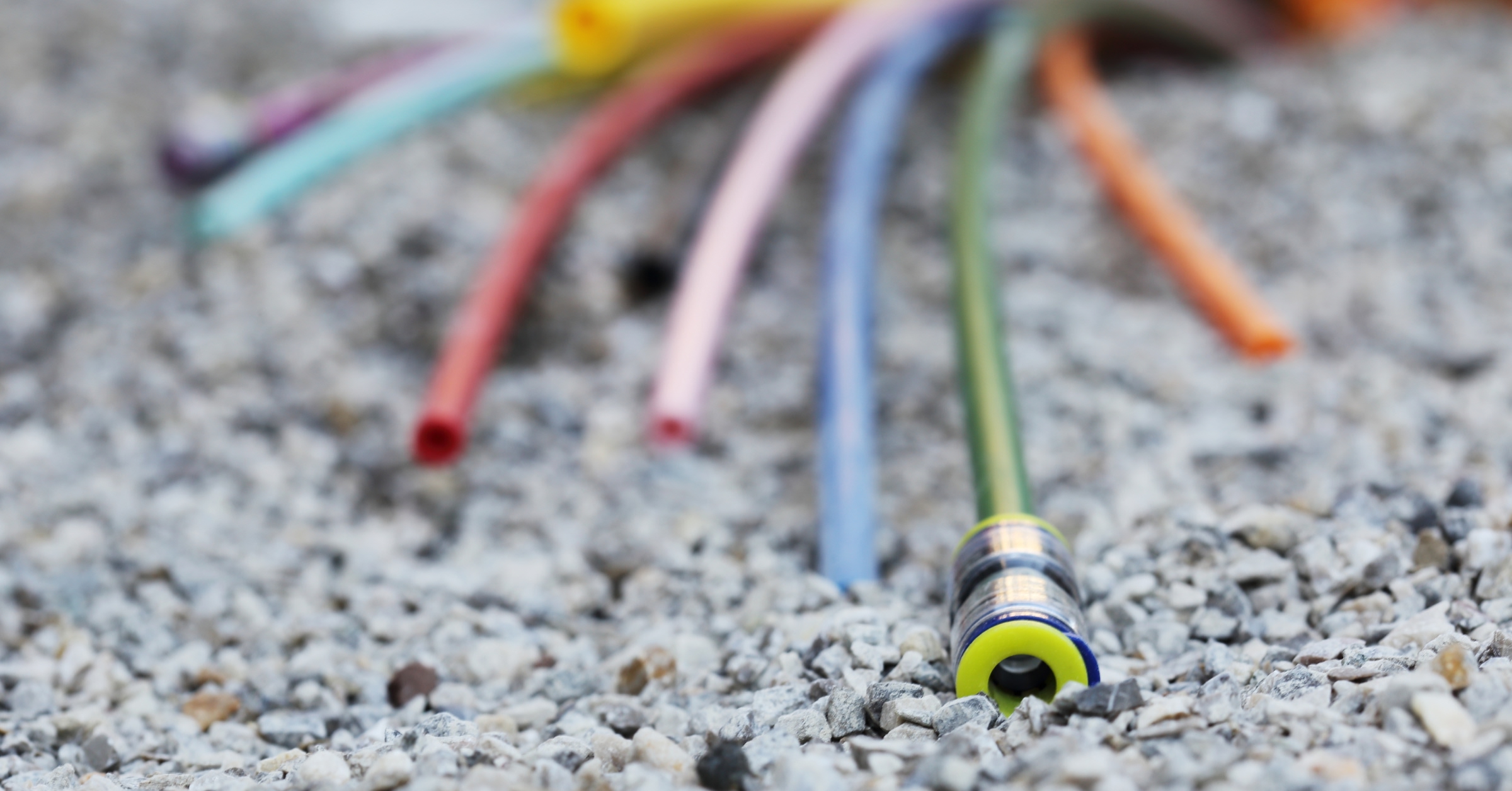
Composed of plastic and thin glass cables that transmit light impulses, fiber optics can deliver speeds of up to 10 Gbps for both upload and download. It provides a stable, low-latency network —regardless of distance or number of connected devices — offering the ideal foundation for the development of advanced digital services accessible to everyone.
Open Fiber and the FTTH Network Connecting Italy
Open Fiber is ready to meet these challenges.
Its goals are clear: to reduce the digital divide and develop an efficient fiber-optic network, available to all telecommunications operators on equal terms, ensuring that citizens, businesses, and institutions can access new online services without barriers.
By the end of 2024, according to the latest Open Fiber Sustainability Report, the company had built over 140,000 kilometers of fiber-optic network across Italy. This achievement translates into an infrastructure capable of making access to information truly universal, fostering participation and innovation even in the country’s White Areas.
Open Fiber continues to drive Italy’s digital transformation, bringing ultra-broadband connectivity everywhere — even to you. Check the coverage and find out if fiber optics has already reached your address.